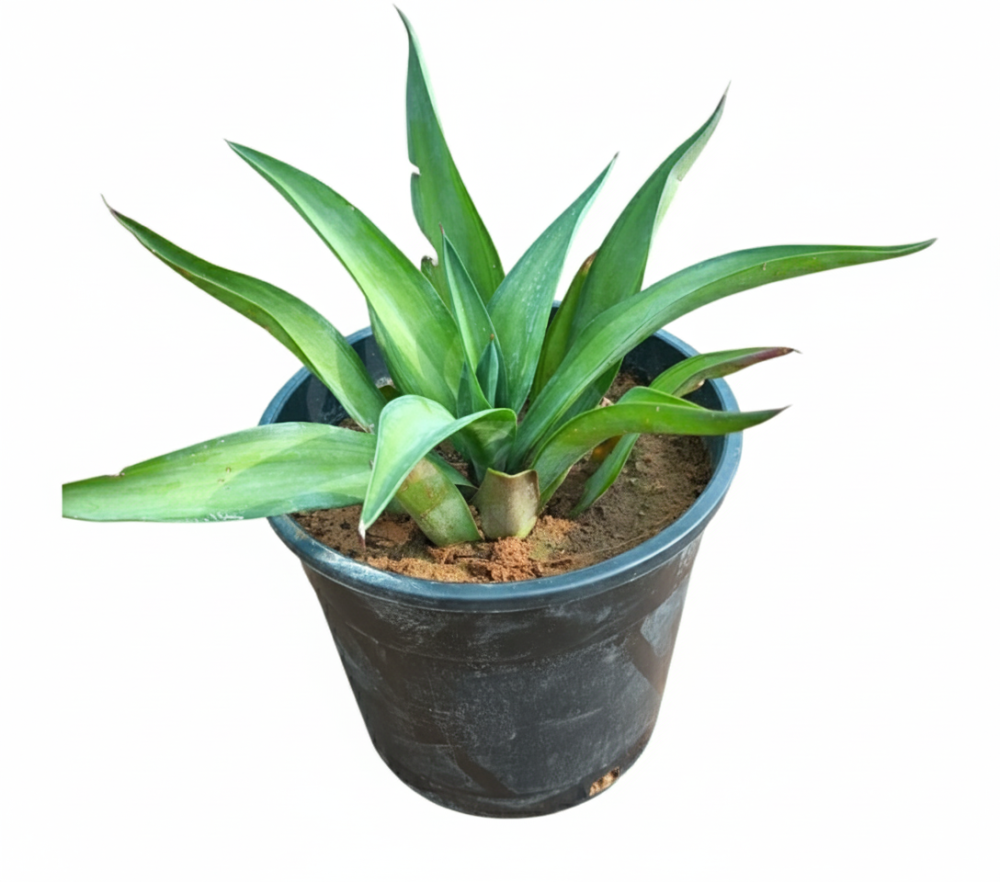
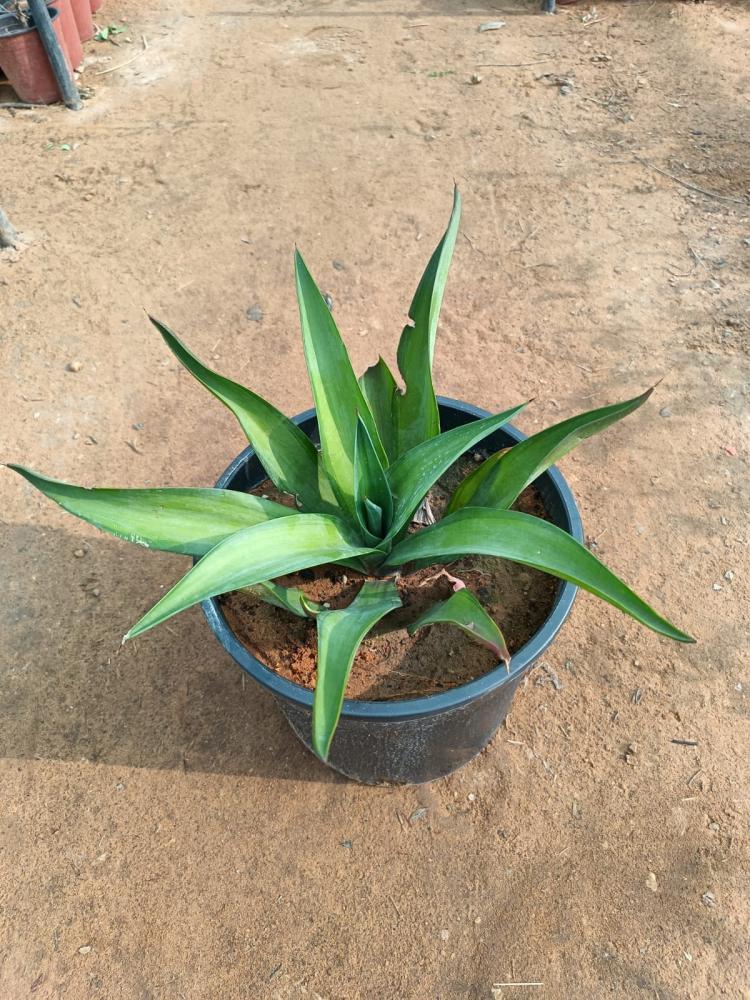
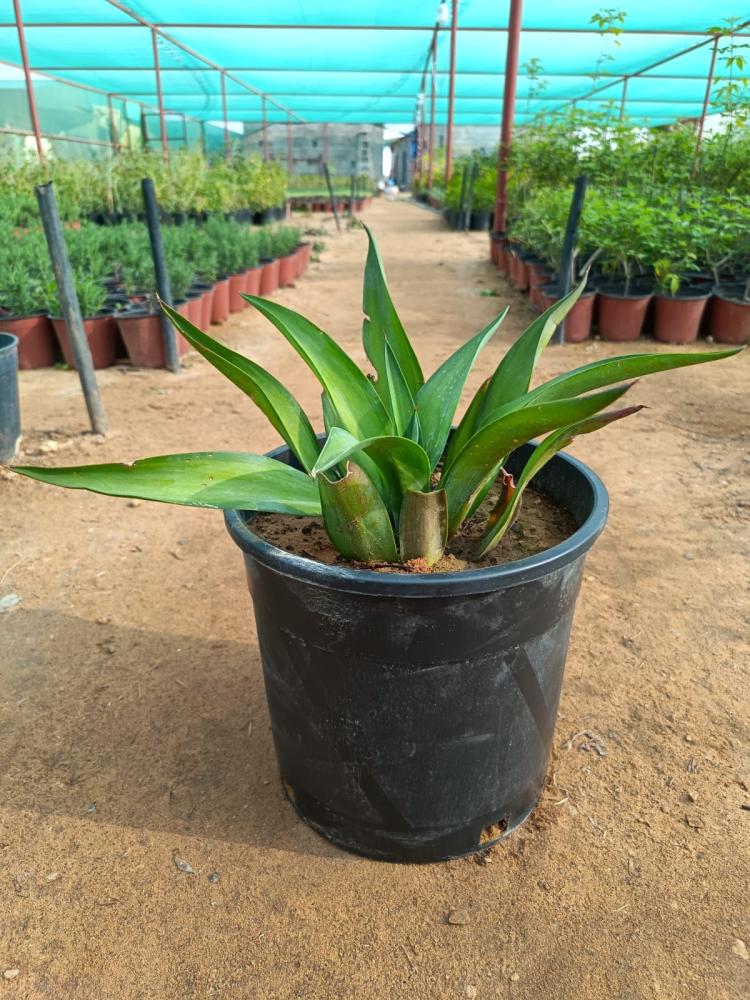
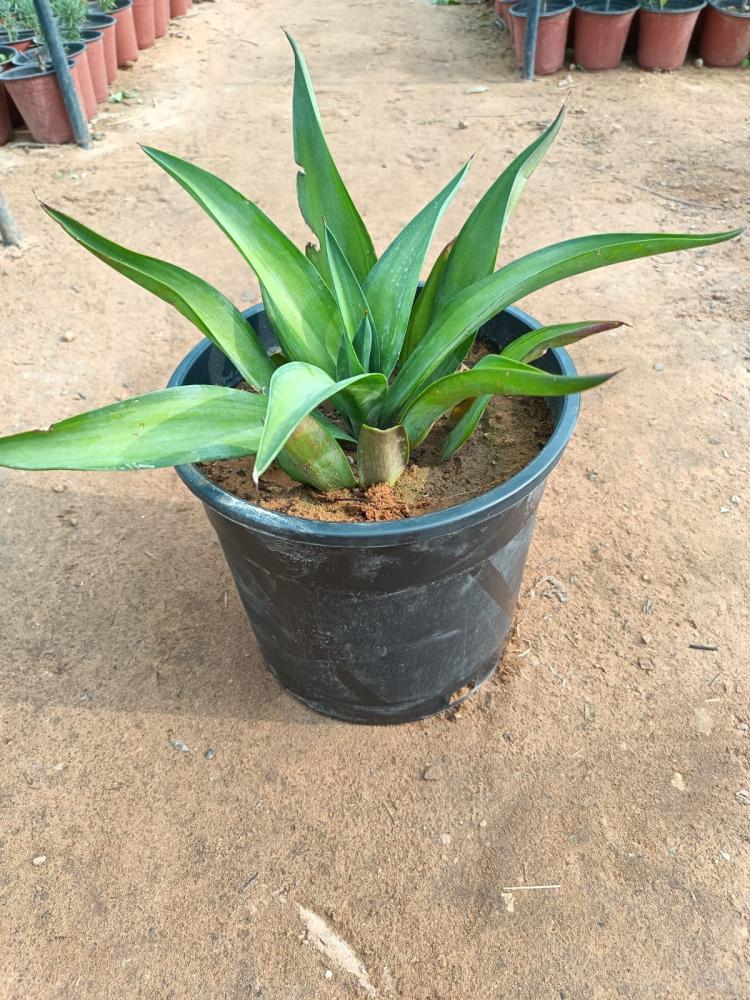
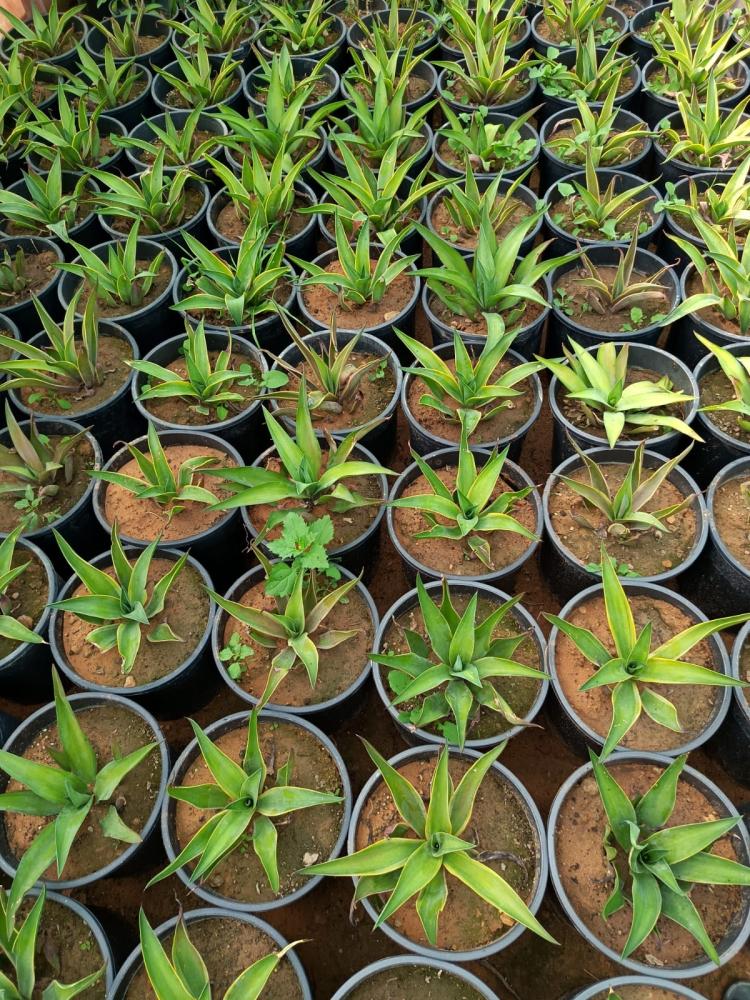
Agave plant is a type of perennial succulent characterized by its thick, pointed leaves arranged in a basal rosette, and it is one of the plants that tolerate drought and extreme heat, making it ideal for desert and rocky gardens. It is used in landscape design and sometimes for extracting juices and fibers.🌿 Features of the Agave plant 1. Distinctive shape suitable for modern gardens ✅ It features strong, attractive leaves with a bluish-green or silvery color, making it a great addition to rocky and desert gardens. ✅ Some varieties have serrated or spiny edges that provide natural protection against animals. 2. Tolerates drought and high heat ✅ One of the most drought-resistant plants, making it suitable for hot and arid climates. ✅ Does not require much water, helping to reduce water consumption in gardens. 3. Blooms once only then dies (in some varieties) ✅ Some types of agave produce a large flower after several years (from 10 to 30 years), then the original plant dies, but leaves behind small plants (offspring). 4. Used in various industries ✅ Some varieties, such as Agave tequilana, are used to produce tequila. ✅ Also used in producing natural fibers for making ropes and baskets.💧 Care methods for Agave cactus 1️⃣ Watering ✅ Does not need frequent watering – it is preferable to let the soil dry out completely between waterings. ✅ In summer: about once every two weeks. ✅ In winter: about once a month or as needed by the soil. 2️⃣ Lighting ✅ Prefers direct sunlight for 6-8 hours daily. ✅ Can grow in partial shade, but growth will be slower. 3️⃣ Soil ✅ Needs well-draining soil to prevent root rot. ✅ Can be planted in sandy soil mix or cactus-specific soil. 4️⃣ Fertilizing ✅ Does not require much fertilization, but a low-nitrogen fertilizer can be added once every 3-4 months during the growing season. 5️⃣ Pruning and care ✅ Does not need regular pruning, but it is preferable to remove dry or damaged leaves to maintain its appearance. ✅ Be cautious of the sharp edges of some varieties when handling.
Read more