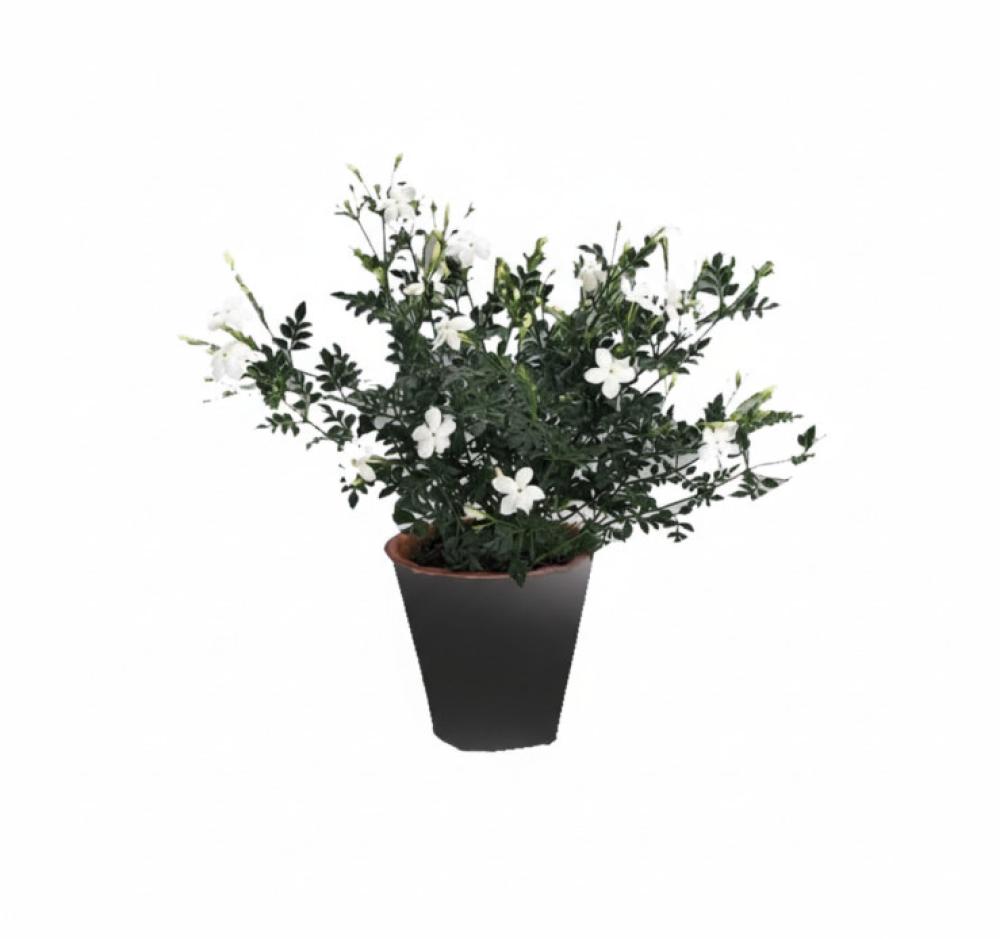
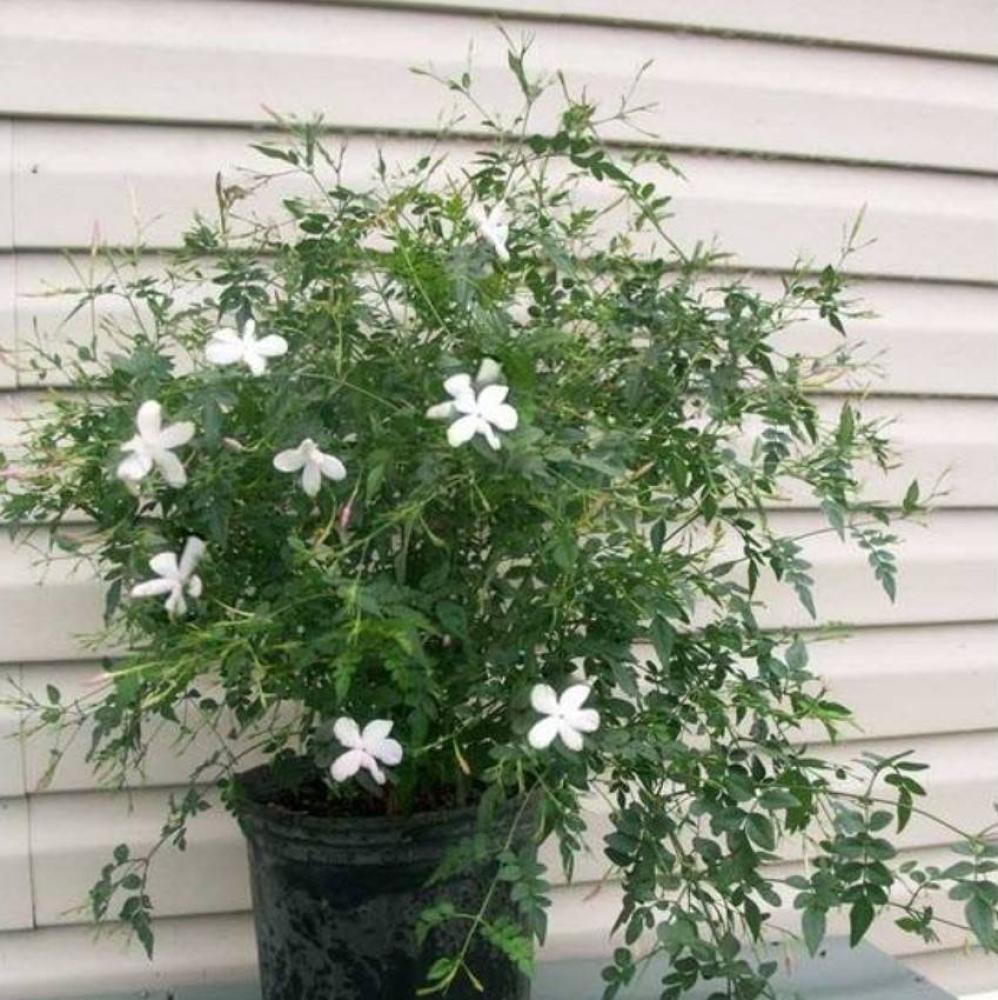
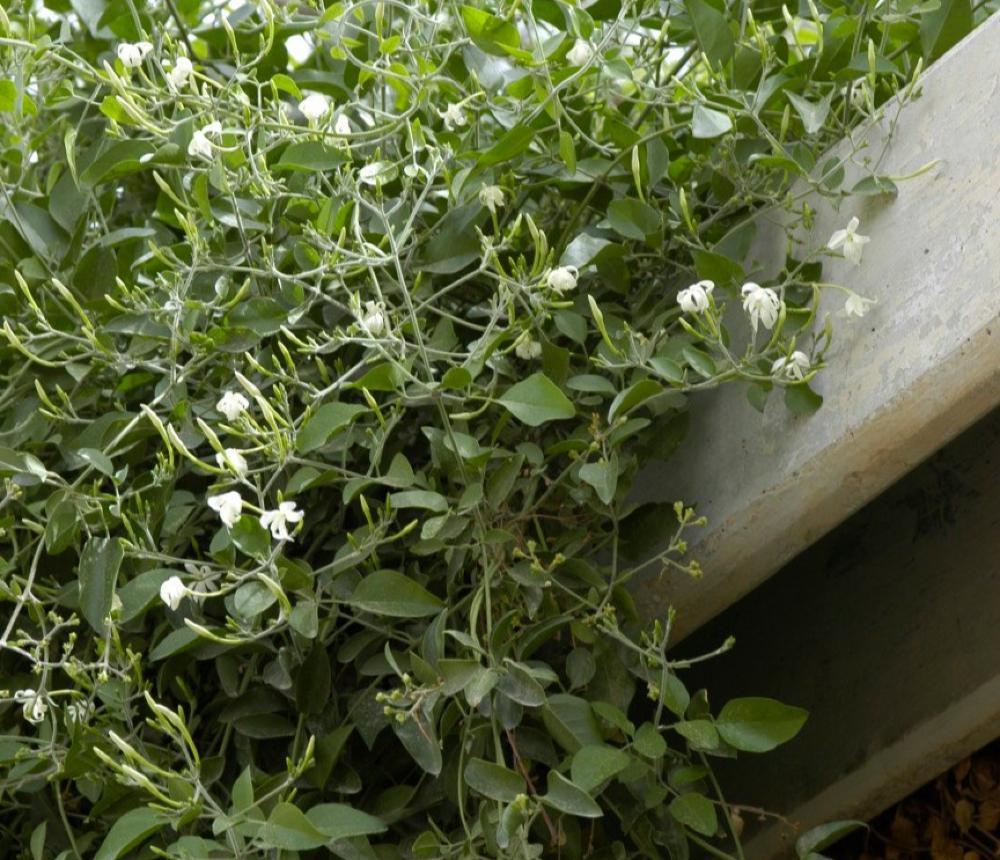
The local jasmine (Jasminum sambac) The local jasmine, also known as "Sampak jasmine" or "Arab jasmine," is a type of flowering plant belonging to the Oleaceae family. It is considered one of the most famous types of jasmine, known for its fragrant scent and the beauty of its flowers.
Characteristics:
Growth: It is considered a creeping or climbing shrub, which can reach a height of about 1-3 meters.
Leaves: Characterized by its dark green leaves, which are compound and consist of 3-5 leaflets.
Flowers: Produces small white flowers, star-shaped, emitting a strong fragrant scent, making it a focal point in gardens.
Fruits: Produces small berry-shaped fruits, but they are not of agricultural importance.
Uses:
Garden decoration: Widely used in landscape design, either as climbing plants or as hedges.
Perfumes: Jasmine flowers are used in the manufacture of perfumes and aromatic products.
Traditional medicine: Used in some cultures for medicinal purposes, such as relieving stress.
Adaptations:
Climate: Prefers warm and humid climates, and can tolerate some drought after establishment.
Soil: Grows well in well-drained soil, preferably rich in organic matter.
Care:
Watering: Needs regular watering, especially during dry periods.
Fertilizing: Periodic fertilization is preferred to promote growth and flower production.
Pruning: It is recommended to prune the shrub to stimulate growth and increase flower density.
Threats:
Diseases: May be exposed to some fungal or insect diseases.
Climate change: Harsh climatic conditions can affect its growth.
In general, the local jasmine is an excellent option for garden decoration, adding a touch of beauty and a fragrant aroma to any environment.
Learn more about other enchanting jasmine varieties and discover the features of each type, such as white Indian jasmine, Murray jasmine, and Zafar jasmine tree, to add a touch of beauty and fragrant scent to your garden or home.
Read more